16 April 2026
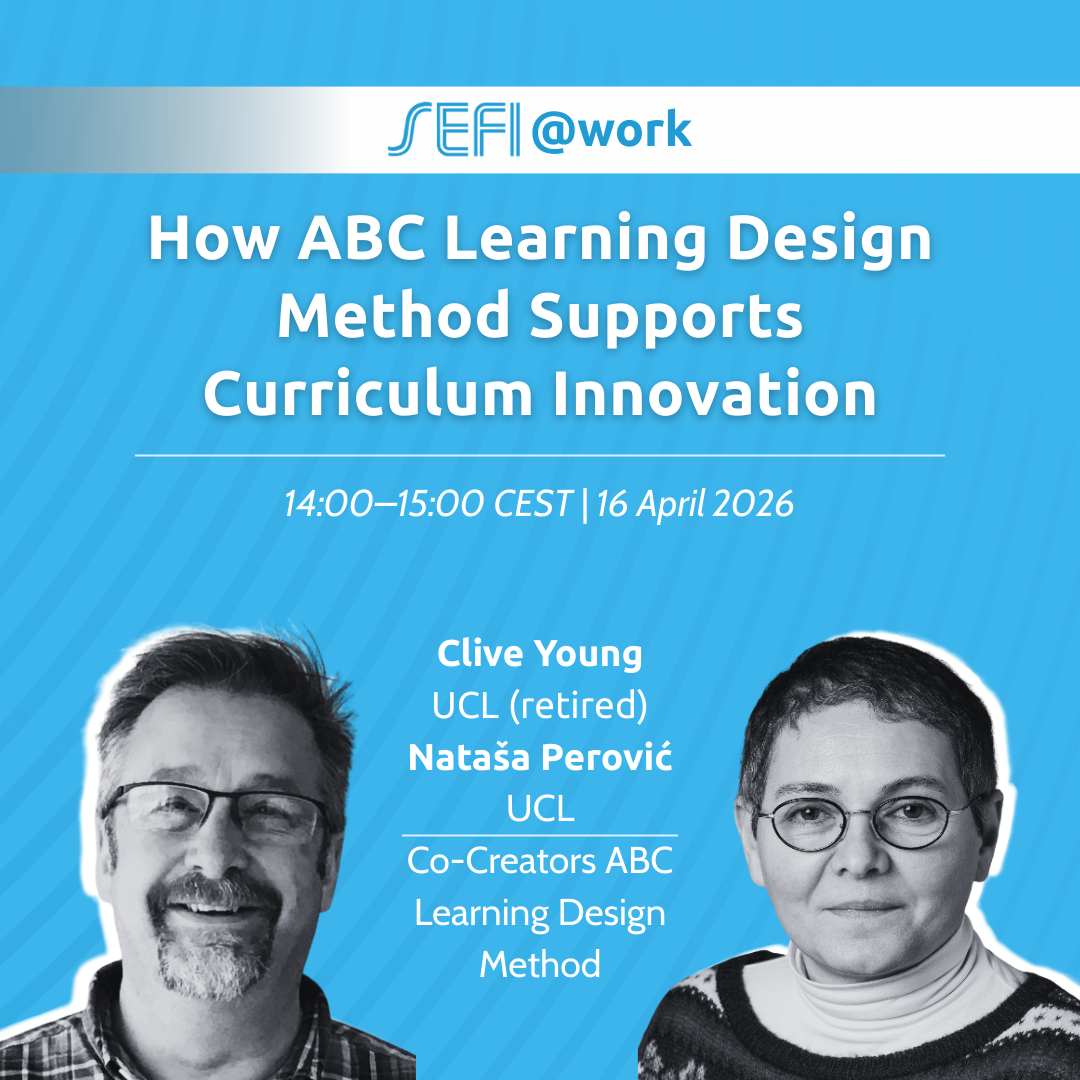
ABC Learning Design is a popular and effective rapid design method for developing educational programmes, modules and short courses. Join the co-creators to explore this method for our upcoming SEFI@work brought to you by the SEFI Special Interest Group on Curriculum Development.
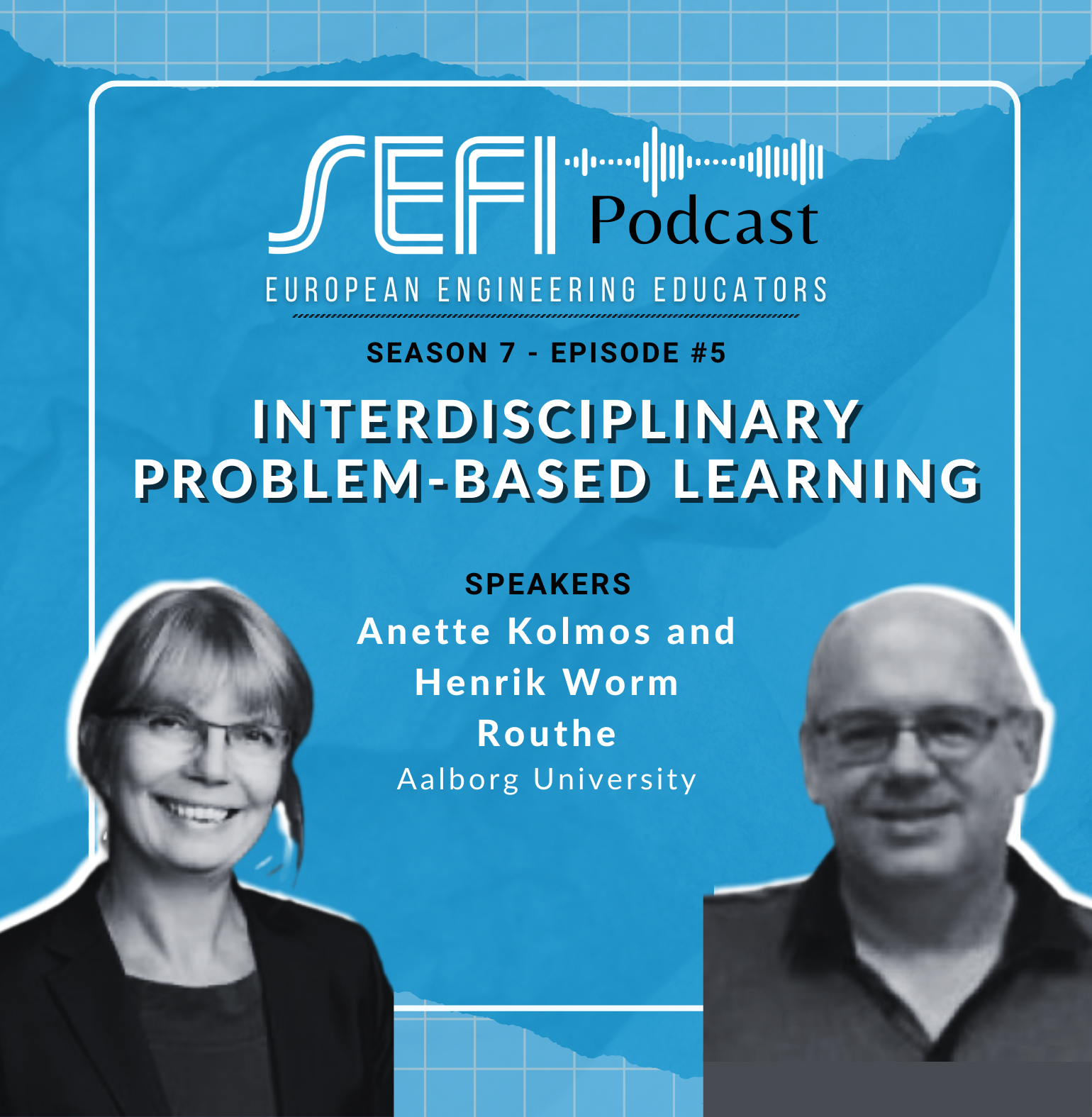
The rising complexity of modern societal challenges has intensified interest in interdisciplinary engineering education.
In this episode we speak to Professor Anette Kolmos (Professor in Engineering Education and PBL) and Dr Henrik Worm Routhe (Postdoctoral Researcher) from Aalborg University (AAU) in Denmark, about InterPBL and the different approaches to interdisciplinary learning and teaching.
The start of InterPBL
Anette explains that they initially began by experimenting with ‘mega-projects’ (large scale multi-team/inter-team projects across humanity, social science, medicine, science and engineering which involve working on challenges with external partners), soon learning how challenging this was. For example, students struggled working together; their understanding of problems varied and their methods for project management and knowledge sharing, as well as culture, were different. This, alongside the need to understand the implications of running different types of projects (e.g., interdisciplinary vs. transdisciplinary) is what sparked the need for a bigger project. InterPBL involved working with the Grundfos Foundation who found that their employees worked in silos, and who were thus interested in the research being conducted at Aalborg. The aim of the project was to develop further understanding of interdisciplinarity.
Project aims
Anette and Henrik explain that InterPBL involved four sub-projects:
- Focused on the curriculum, understanding of interdisciplinary projects and development of a typology of (inter) disciplinary projects,
- Focused on coordination, management and leadership competencies,
- Focused on collaboration, integration and trust building,
- Focused on interdisciplinary in engineering practice.
The need for interdisciplinary
Anette explains that there has always been a need for interdisciplinary, and that engineering practice has always been interdisciplinary in nature. However, the term is often reserved for academia, where we see new interdisciplinary subjects including biotechnology, mechatronics, etc., their development being informed by societal needs, and taking numerous years. Henrik claims that the nature of problems today means that we cannot wait for the development of new programmes, and that engineers need to be flexible and agile enough to collaborate across boundaries.
Defining interdisciplinary
Anette explains that they started with a literature review,firstly focused on understanding what a discipline is, this including knowledge, epistemologies, culture, pedagogies. She explains that interdisciplinary is the integration process between different skills and competencies, as well as knowledge, and involves understanding or acceptance of different cultures and pedagogies.
Henrik elaborates by defining the difference between narrow interdisciplinary (disciplines more related to each other in a paradigmatic sense and epistemology) and broad interdisciplinarity (involving integration between engineering and social science and humanities).
Anette explains that cognitive trust (which considers whether you believe other people have expertise) is experienced differently when working in a broad versus narrow interdisciplinary space. For example, engineers from different engineering disciplines may have some areas of common understanding which facilitate respect and humility, making it easier to exchange knowledge. In comparison it is harder to create common ground when engaging in broad interdisciplinary.
Creating common ground
Henrik explains that you can create common ground by making use of a boundary object, this being an item (e.g., a map, model, drawing) that bridges different groups by adapting to each group’s specific needs while having a consistent identity which facilitates communication and collaboration across different communities or disciplines. Anette explains that an interdisciplinary team needs a common understanding of the problem they are working on
Changing the narrative
Anette encourages changing the narrative which suggests that a focus on interdisciplinary is diluting disciplinary identities, claiming that interdisciplinary encourages students to learn about their own discipline and the associated boundaries, advantages and disadvantages. This encourages them to collaborate with those from other disciplines, something which can cement their own disciplinary identity and competencies and demonstrate what they bring to the team.
A typology of interdisciplinary
Henrik explains that the typology was developed from data collected at AAU and has two dimensions: a) the complexity of teams, ranging from single team to networks of teams, and b) the complexity of interdisciplinarity, ranging from disciplinary projects to broad interdisciplinary projects. This results in the identification of six different project types. This typology can be used as a conceptual framework for interdisciplinary learning throughout engineering education.
- A discipline project involves a single team from one discipline.
- An inter-team project involves multiple teams from the same discipline, each working on a different part of one problem.
- A domain project involves narrow interdisciplinary teams (e.g., different engineering disciplines).
- A system project involves narrow interdisciplinary teams, but this time students may have different learning objectives. There is thus a need for coordination across narrow disciplines, and for different learning objectives to contribute to a wider goal.
- A mixed micro project involves single broad interdisciplinary teams.
- An M-Project or megaproject involves the coordination of multiple broad interdisciplinary teams.
The increasingly complexity of projects can help scaffold student development. For example, AAU launched leadENG to let first-year students experience and work together in a narrow interdisciplinary setting. Introducing a narrower interdisciplinary project structure, compared to the megaprojects, offered students the opportunity to develop their collaborative, problem-oriented and project management skills and competences. They can then progress with their experiences from disciplinary teamwork and project management.
Students need to have some experience in problem analysis, project management and teamwork before entering more complex project settings like leadENG, as they need fundamental disciplinary PBL competences for managing this type of project setting.
Henrik explains that some of these project types allowed students to understand the role of leadership vs management and that they may engage in shared or rotating leadership whereby individual roles are dependent on the stage of the project.
He tells us that one bottleneck for teams in these types of projects are inconsistencies in the prioritisation of sub-goals vs overall (common) goals. In this sense, he explains that projects are set up in a way that means that students are not entirely dependent on other teams in terms of securing good grades in assessment. This is important given that much of the assessment is based on the product as opposed to the process.
Integrating interdisciplinary projects into your own context
Anette explains that although it is primarily the product of the interdisciplinary work which is assessed, the involvement of facilitators means that students receive summative and formative feedback on the process. To this end, a key part of capacity building is considered to be staff working in interdisciplinary research teams themselves. Anette reminds that that they are not trying to sell the AAU model, rather inspiring institutions to transform ideas in practice within their own context.
An example of an M-Project.
Anette provides the example of handling wate in private households, explaining that it can involve psychology students (focusing on behaviour), those from environmental management (working on the different waste processes), as well as biotechnology students (focusing on biowaste). She explains that coordination of such projects is challenging and that different disciplines approach problems in very different ways. This means that a top-down approach is not appropriate in this context and that staff enthusiasm is important.
Key takeaways
Anette summarises the key contributions of the work:
- Creation of mental models and language to describe different types of interdisciplinary projects
- An understanding of the different types of collaboration which occurs under different conditions
- Formulation of learning outcomes and the generic competencies and traits
- Understanding of the different cultures and pedagogies involved
What’s next?
Henrik tells us that the work initially took an inductive approach, this resulting in the development of shared mental models, terminology and language. The next step of the work therefore includes talking to students again with new lenses.
Anette explains that there will also be a focus on gaining a deeper understanding of engineering practice which is, in its nature, inter/transdisciplinary.
Resources
A small sample of papers which focus on the InterPBL project are linked below.
Related Posts