16 April 2026
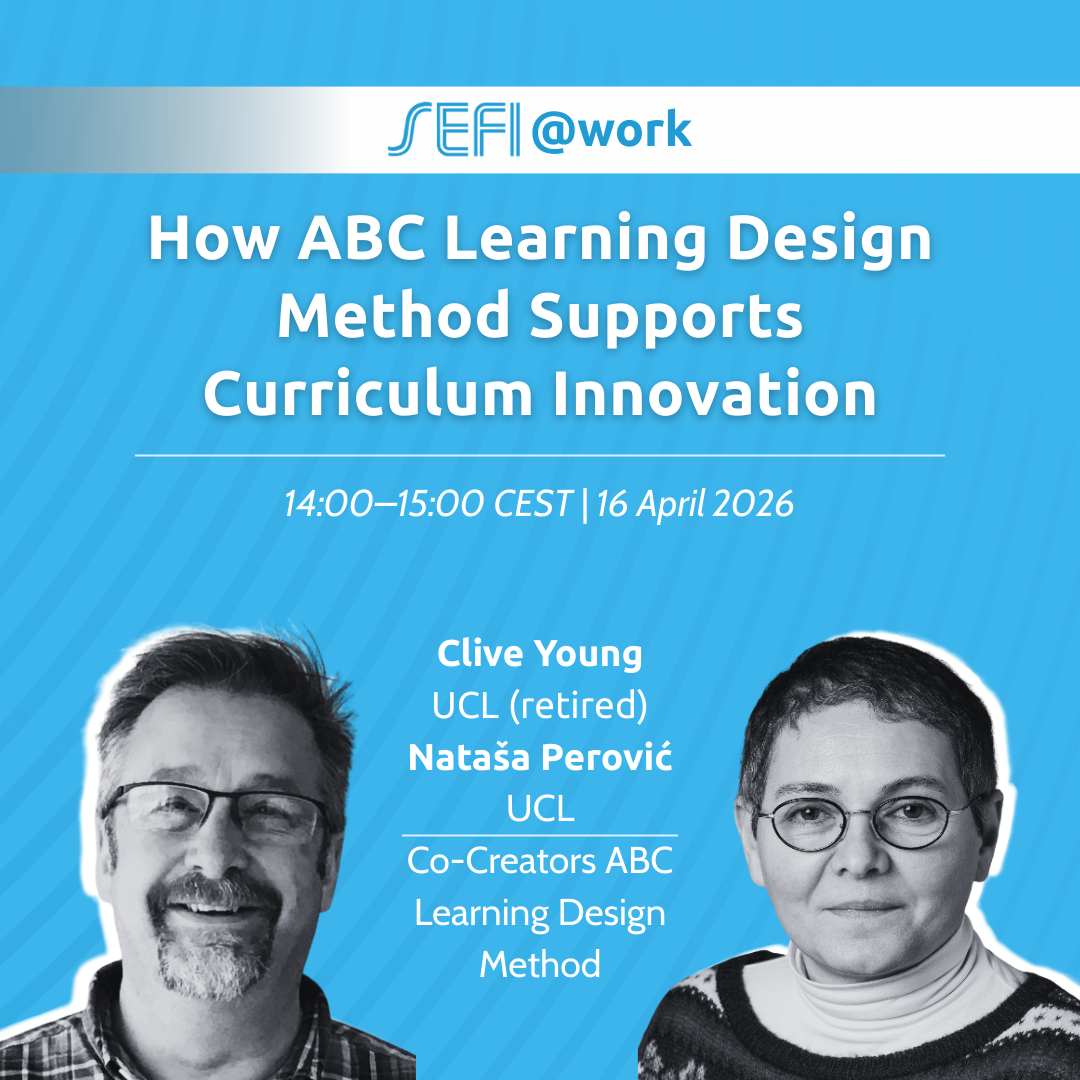
ABC Learning Design is a popular and effective rapid design method for developing educational programmes, modules and short courses. Join the co-creators to explore this method for our upcoming SEFI@work brought to you by the SEFI Special Interest Group on Curriculum Development.
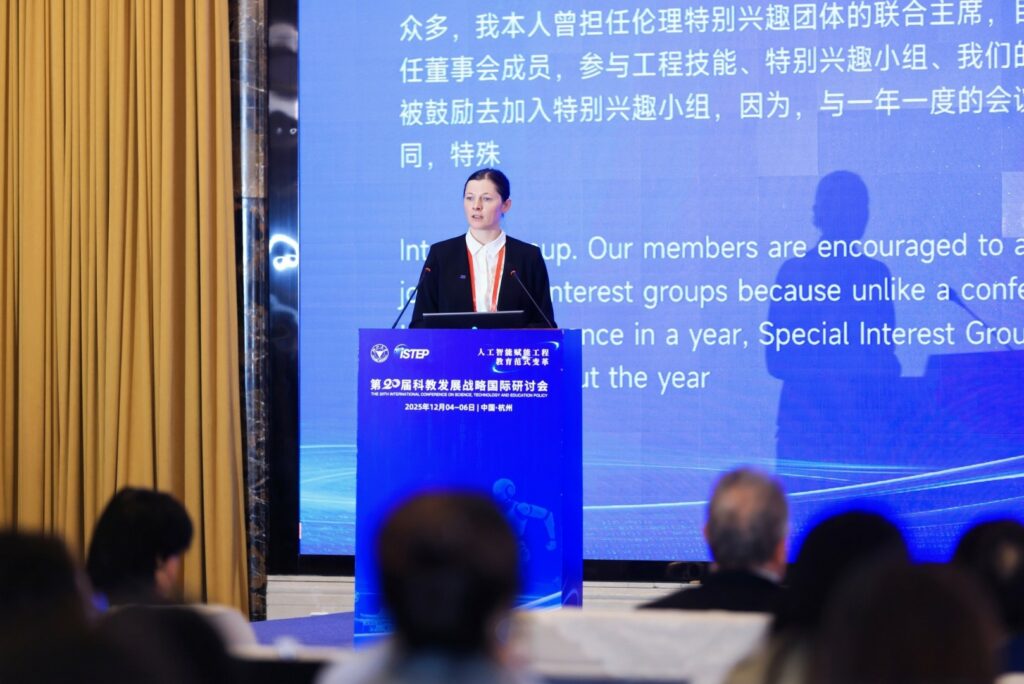
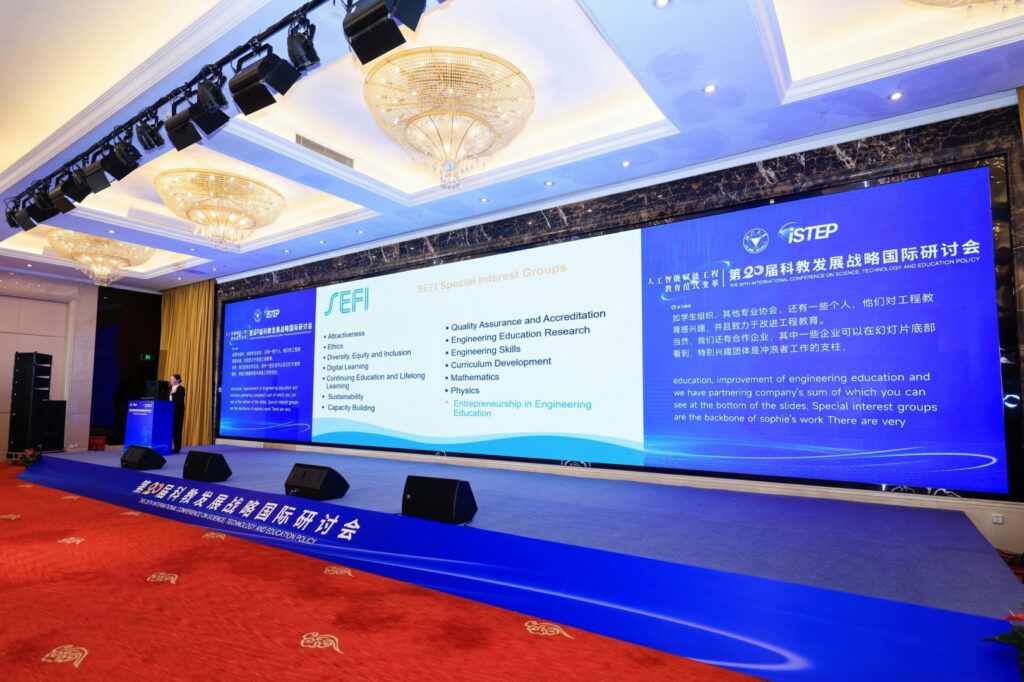
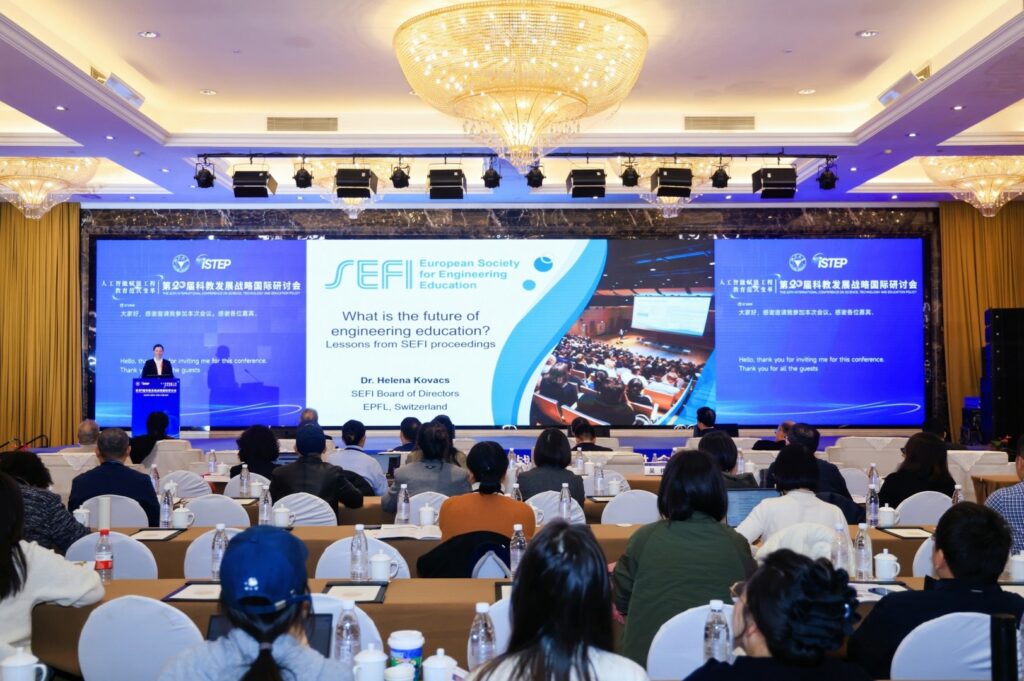
In early December, Helena Kovacs, Skills and Learning Manager at EPFL and member of the SEFI Board of Directors, was invited to deliver a keynote at the International Conference on Science, Technology, and Education Policy (iSTEP), organised by the Chinese Society for Engineering Education (CSEE) in Hangzhou, China.
Helena’s keynote addressed a question increasingly central to engineering education worldwide: how should we respond to the growing presence of artificial intelligence in teaching and learning?
She opened with a deceptively simple example — a basic mathematical problem typically assigned to first-year engineering students. Today, such problems are routinely solved using calculators. Yet when calculators first entered classrooms in the 1960s, they were met with strong resistance. Educators feared students would lose mathematical competence, while teachers themselves were unsure how to integrate the technology pedagogically.
History, of course, has resolved that debate. Calculators are now an accepted educational tool. The more interesting question, Helena argued, is not whether to use such tools, but what we do with the time they save.
This analogy, she suggested, applies directly to Artificial Intelligence (AI) in education today. While concerns about uncritical reliance on AI are legitimate, the challenge lies in designing learning experiences that use these tools responsibly. How can educators shift attention away from repetitive, low-level tasks and towards higher-order thinking, reflection, and judgement? And how should students use the time that AI frees up?
Drawing on insights from SEFI conference proceedings since 2020, Helena highlighted how AI has only recently emerged as a practical concern, alongside a longer-standing focus on transferable skills and an increasing convergence around a shared goal: educating responsible engineers.
Helena left Hangzhou with a strong sense that, across cultures and educational systems, engineering educators are grappling with remarkably similar questions about technology, learning, and responsibility. As tools continue to evolve, she concluded, responsibility must remain at the core of engineering education.

Related Posts