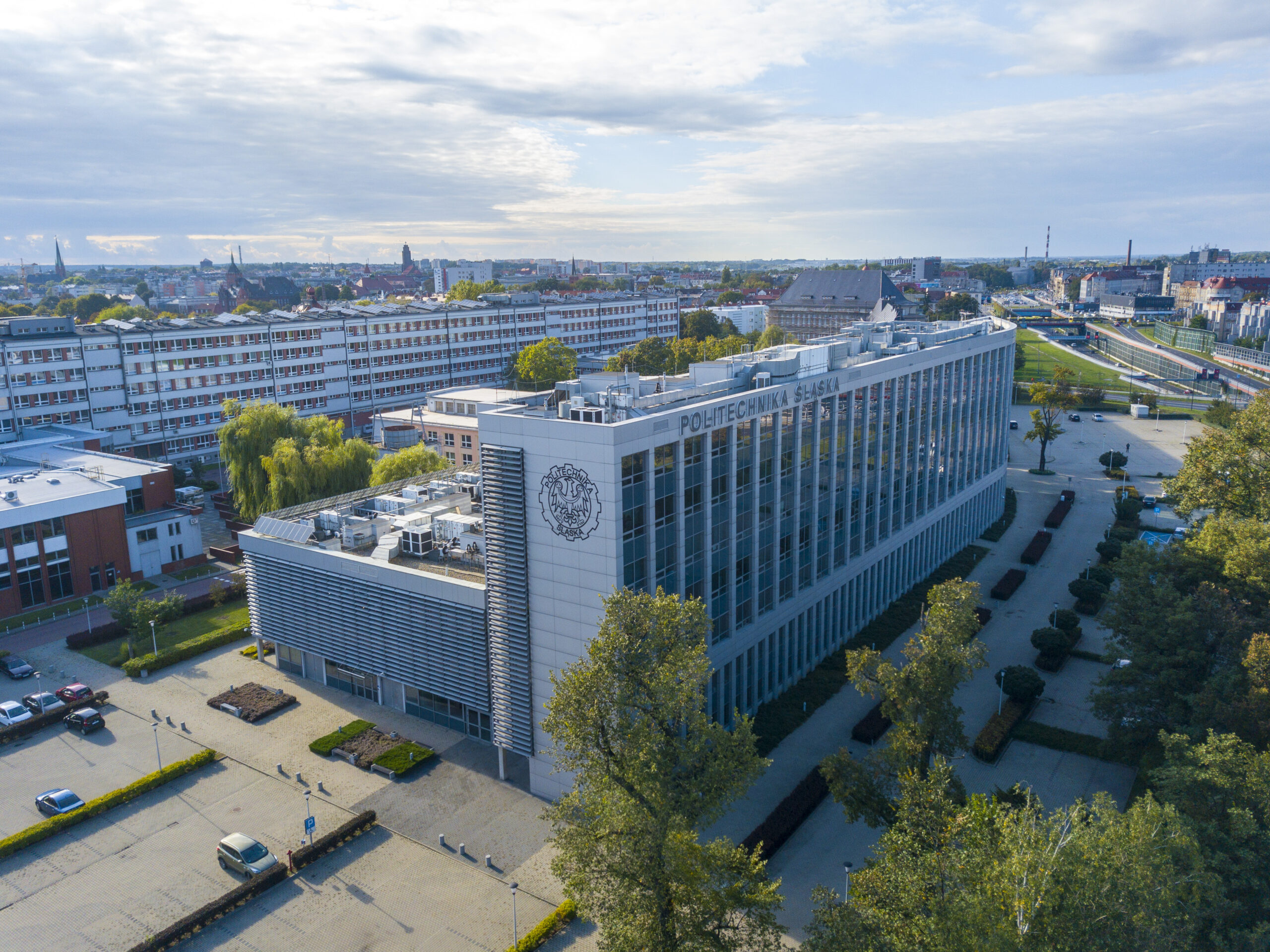
The Silesian University of Technology (SUT) is located in one of Europe’s most industrialised regions,…

Engineering Education for Humanity in a Challenging World
The current global landscape is characterized by many complex and challenging situations that demand the expertise and involvement of engineers and scientists. Many of these challenges frequently call for innovative engineering solutions, whether directly through technical design or indirectly through multidisciplinary collaboration. While engineers are often focused on providing reliable, optimized, and efficient solutions, the broader societal, ethical, and cultural impact of these solutions might be beyond the scope of traditional engineering practice.
Addressing these challenges effectively requires a more holistic perspective integrating insights from social sciences, humanities and ethics into the engineering curricula and professional practice. By fostering interdisciplinary understanding, engineers can not only create technically robust solutions but also ensure that these solutions are socially responsible, culturally sensitive, and sustainable in the long term.
By emphasizing humanity in engineering, we aim to foster approaches that tackle global challenges thoughtfully, and that produce solutions that advance technology while nurturing society, culture, and human sympathy. The 54th SEFI Annual Conference seeks contributions that explore how engineering and scientific practice can be more deeply aligned with human values.
- Download a PDF of SEFI 2026 Call for Papers
- Find submission templates here
- Submissions deadline: 1 April 2026 → Submit here
- For further information contact: sefi2026@guarant.cz
We welcome four submission types (described in more detail below):
- Research papers: On engineering education (both quantitative and qualitative)
- Practice papers: On teaching innovations in engineering education
- Workshop proposals: To interactively demonstrate or explore an educational practice
- Idea market presentation: To present work in progress or practical prototypes
Conference Tracks
While contributions on any aspect of engineering education are welcome, we particularly welcome contributions aligned with one of the following conference tracks:
- Dialogue between engineering and society – effects on education
- Engineer as a social debater – new skills needed?
- Teaching mathematics and physics in engineering education
- Digital tools and AI in engineering education
- Open and online education for engineers
- Diversity, equity and inclusion in our universities and in our teaching
- Sustainability and society in engineering
- Continuing education and life-long learning in engineering
- The attractiveness of engineering
- Engineering skills, professional skills, and transversal skills
- Engineering ethics education
- Curriculum development and emerging curriculum models in engineering
- Quality assurance and accreditation of engineering educational programs
- Building the capacity and strengthening the educational competences of engineering educators
- Strengthening EER (Engineering Education Research) as a research field
- International cooperation in engineering education
- University alliances – impact on engineering education
- Innovation and Entrepreneurship in Engineering Education
Submission Types
Participants are invited to submit one of four submission types:
→ Research paper: This submission presents original quantitative or qualitative research that follows the standard practices in engineering education research. A research paper should include a theoretical background and literature review, as well as methods, analysis, and interpretations of the research. The paper should outline the contribution of the research to both engineering education research and practice. A research paper may be presented either as an oral presentation or as a poster.
→ Practice paper: This submission presents a practical contribution to engineering education by showcasing an intervention, method, or teaching approach grounded in real experience, with clear relevance and innovative potential. The paper should indicate the stage of development of the presented intervention/work and logically outline its set-up. It should also describe the adaptability of the intervention/work for other contexts and its potential impact on the engineering education community. A practice paper may be presented either as an oral presentation or as a poster.
→ Workshop Proposal: This submission outlines an engaging and interactive session that has a sound theoretical foundation and a practical application for engineering education. The proposal should be of interest to SEFI community members and must include a clear learning goal, a description of the theoretical foundation, and a plan for facilitating the workshop, ensuring that most of the time will be spent on active learning experiences for the participants.
→ Idea market presentation: This submission presents ongoing research or practical prototypes in engineering education. Authors may describe their current work and further plans or demonstrate their prototypes and present their application within engineering education. Idea market presentations are accepted exclusively in the form of a poster. During the poster session, idea market presentations are intended to create a collaborative space for sharing ideas and networking, encouraging participants to discuss ongoing work. The authors of accepted idea market presentations are expected to also prepare a short video presentation of a maximum length of 30 secs., which will be presented during the plenary poster pitches. This video presentation will be available online to all participants of the conference and can be accompanied by a non-mandatory extended version that should not exceed 3 minutes in length.
For research and practice papers the maximum length is 8 pages (excluding references), for workshop proposals, it is 6 pages (excluding references). Shorter submissions are welcome and may provide more flexibility for authors to adapt based on reviewers’ comments before submitting the final camera-ready copy.
Awards
Your paper may be nominated for the following categories of awards: Best Research Paper, Best Practice Paper, Best Student Paper and Susanne Ihsen Award. Since the Susanne Ihsen Award focuses on Diversity, Equity and Inclusion, there is a particular set of criteria for paper nomination and award decision, explore them here.
Important Dates
ONE-ROUND REVIEW PROCESS: For the 2026 SEFI Conference, as in the past two years, we will have one-round submission process with only one review phase of the full papers. Abstract-only submissions will not be accepted.
To ensure an efficient review process, we do not foresee extending the deadline!
| Submission opens | 02.02.2026 |
| Submission deadline: – Research full papers – Practice full papers – Workshop initial proposals – Idea market presentations | 01.04.2026 |
| Reviewer feedback and notification of acceptance, conditional acceptance or rejection | 29.05.2026 |
| For conditionally accepted papers: Submission of camera-ready revised papers and rebuttals. | 10.6.2026 |
| For conditionally accepted papers: Final notification of acceptance or rejection | 30.06.2026 |
| Final research and practice paper submission (camera ready) | 30.06.2026 |
| Early bird registration deadline | 03.07.2026 |
| Conference date | 07.09.2026 – 10.9.2026 |
| Final workshop report (camera ready) | 15.10.2026 |
Diversity, equity and inclusion at SEFI 2026
SEFI is committed to fostering an inclusive and welcoming conference environment. Building on the measures successfully introduced at the SEFI Annual Conference in Lausanne 2024, the organisers of SEFI 2026 provide free childcare during the conference, scholarships for students and early-career researchers, and support with visa applications before the conference.
CLEER-ACCURATE Study at SEFI 2026
Information for authors submitting to SEFI 2026
In the context of SEFI 2026, authors submitting a paper are invited to participate in the CLEER-ACCURATE research study. Participation is voluntary and has no impact on the peer-review process or acceptance decisions. The reviewers will have no insight into participation or the individual outcomes of the study.
The study is conducted alongside the standard conference workflow and complies with all applicable ethical and data-protection requirements.
For further information contact: sefi2026@guarant.cz
Conference website: https://sefi2026.eu/
Related Posts