REGISTRATION OPEN: SEFI Ethics Spring School
The SEFI Ethics Spring School 2021 will offer one and a half days of interactive workshops, papers, and discussions on new ideas and practices in teaching and researching engineering ethics.



Ethics Seminar: Using case studies in engineering ethics education 04 March 2021, 15-17:00 CET - online Register here Speakers: Cindy Rottmann (University of Toronto, Canada) Decoupling ethics from equity is neither ethical nor equitable Aditya Johri (George Mason University, USA) Implementing…
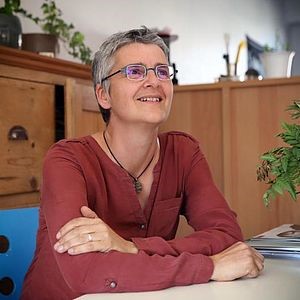
Christelle Didier, University of Lille, France A few years after I had given up engineering education to embrace social work and education, a question made me become a researcher « Why are there code of ethics written by engineers for engineers…
Fátima Monteiro, (Instituto Superior de Engenharia de Coimbra) and Carlinda Leite (Faculdade de Psicologia e de Ciências da Educação da Universidade do Porto ) Portugal The professional practice of engineering implies decisions that often lean on ethical and deontological issues,…
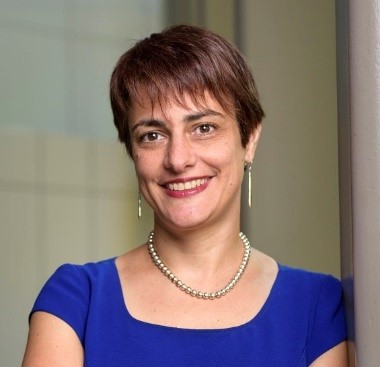
Donna Riley (Kamyar Haghighi Head of the School of Engineering Education at Purdue University, US) Across its many disciplines and settings, engineering maintains ethical standards that guide professional practice. Ethics is an essential component of preparation for an engineering career…

Alison Gwynne-Evans (Professional Communication Studies, University of Cape Town, South Africa) In South Africa, the accreditation of engineering programmes at undergraduate level is formulated by the Engineering Council of South-Africa (ECSA) in terms of three criteria, positioned at different levels…
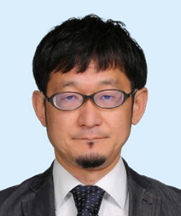
Hidekazu Kanemitsu (Kanazawa Institute of Technology, Japan) Accidents and accreditation In Japan, engineering ethics education is widespread, and offered by many engineering academic and professional societies. Two important reasons are the internationalization of engineering education and the establishment of an…

Catherine Deegan (School of Electrical and Electronic Engineering, TU Dublin, Ireland) https://twitter.com/cath_deegan In Ireland, engineering programmes are accredited every 5 years. Engineers Ireland developed a set of criteria, ranging from specific programme skills and knowledge to the more general, transversal…

Sarah Junaid (Aston University, UK) Accrediting bodies are increasingly expecting to see evidence in the delivery and assessment of ethics throughout engineering programmes. From the UK and Irish context, and the national picture elsewhere, ethics has begun to play a…
FROM MEMBERS Students from the engineering schools around the world often find Control Theory very challenging compared to other engineering courses. Therefore, teachers and researchers from University of Ljubljana (Slovenia), Budapest University of Technology and Economics (Hungary), University of Pisa…