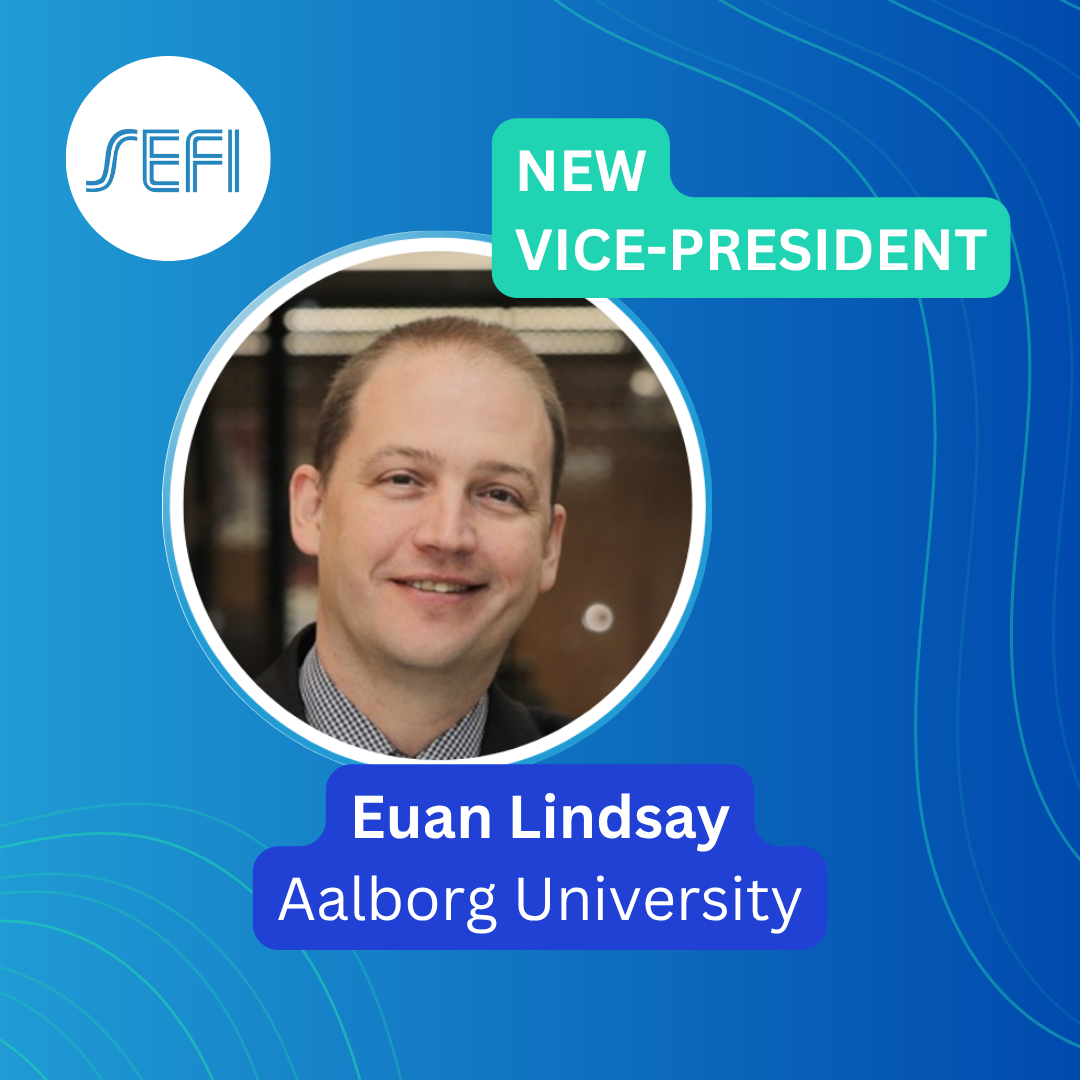
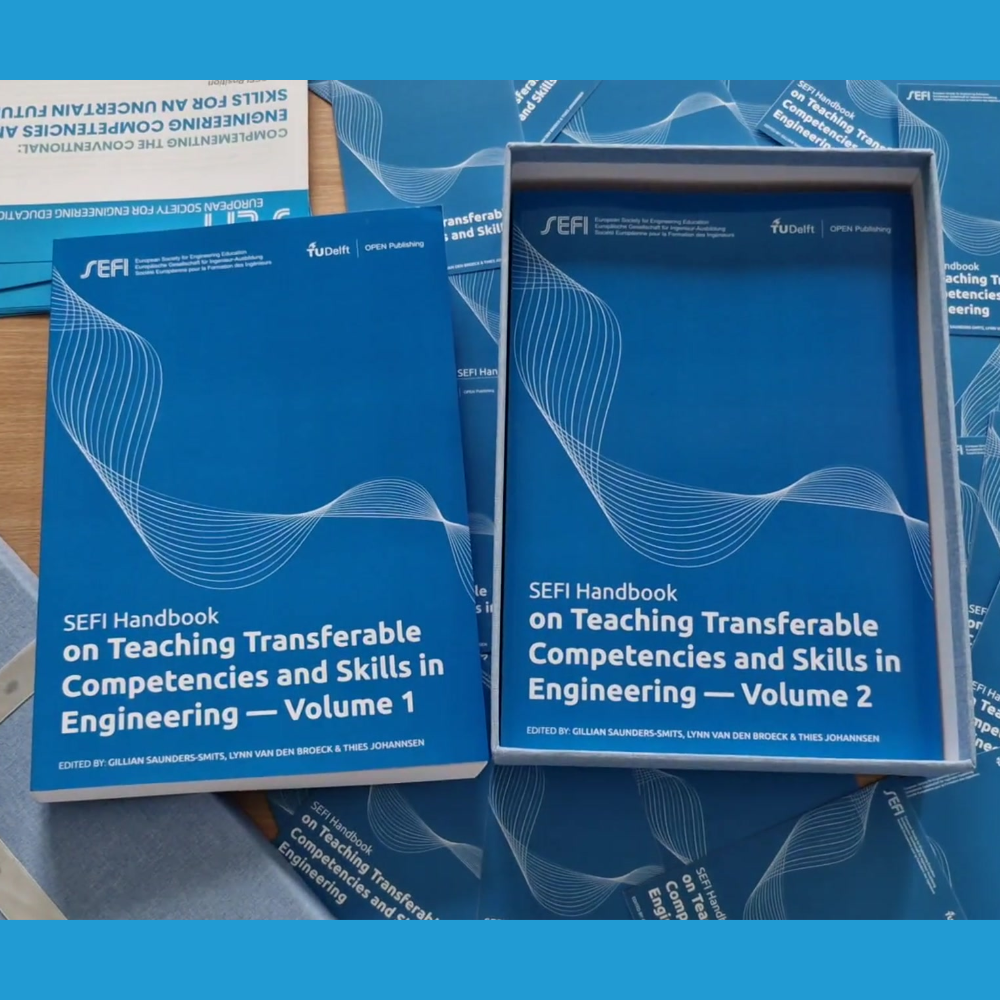
The SEFI 2026 Annual Conference in Prague brought many exciting developments for the SEFI community,…
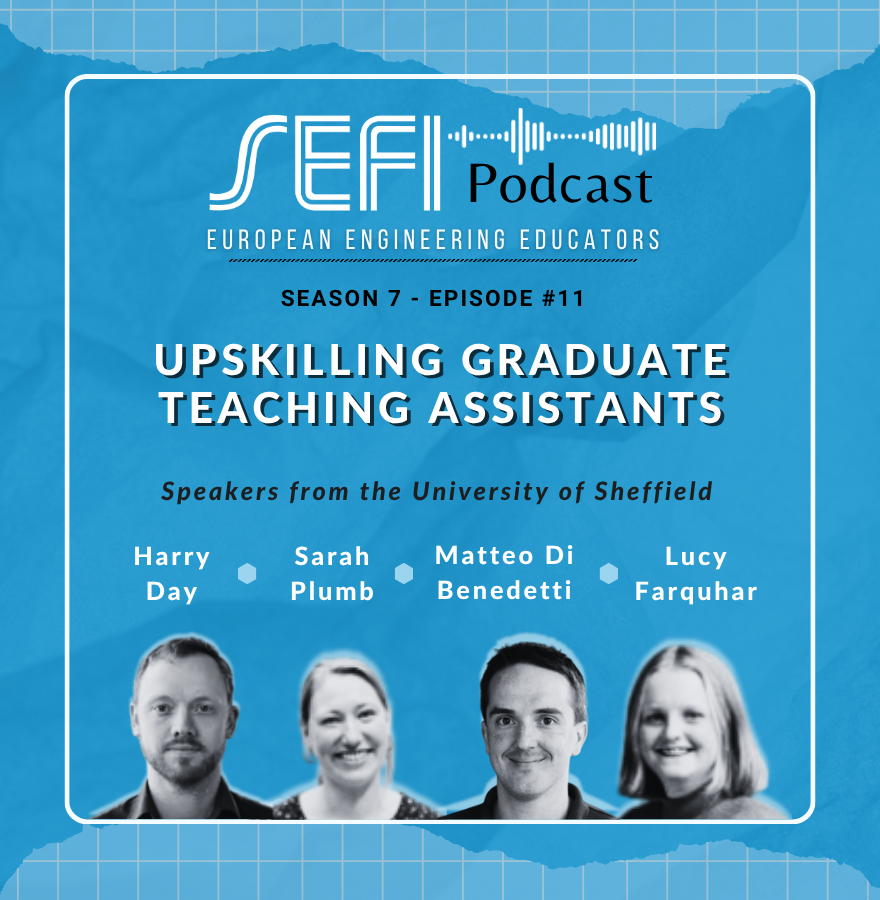
Graduate teaching assistants (GTAs) are an essential part of engineering education, particularly as student numbers continue to grow. However, it’s not often that we stop to consider what teaching is like from their perspective and think about how we can support them as developing educators whose contributions matter.
In this episode, we speak with Harry Day, Sarah Plumb, Matteo Di Benedetti and Lucy Farquhar from the University of Sheffield about their work to transform the GTA experience. Drawing on research and practical experience, they explore how a more supportive, structured approach can benefit GTAs, academic staff and students alike.
What are Graduate Teaching Assistants?
GTAs are typically PhD students who balance their own research with teaching responsibilities. Universities rely on GTAs because they provide flexibility and help maintain staff-to-student ratios, particularly in laboratory-based teaching, but this can also create tensions as GTAs juggle competing demands.
Opportunities and challenges
GTAs occupy what Sarah describes as a liminal position as they are simultaneously students and members of teaching staff. This can be a strength, allowing undergraduates to relate to them more easily, but it can also create uncertainty around identity, authority and confidence. Many GTAs struggle to see themselves as teachers, while inconsistent access to training, information and professional recognition can leave them feeling undervalued.
Drawing on her own experience as a former GTA, Lucy describes how, for many PhD students, teaching begins as a way of supplementing their income rather than a step towards an academic career. Balancing teaching alongside research can create feelings of guilt, while limited preparation time often leaves newer GTAs lacking confidence when they first enter the classroom. This means that teaching can become an additional source of stress alongside the pressures of completing a PhD.
Developing a new approach
The team describe how their work evolved from observing GTA practice in engineering laboratories. They identified 29 pedagogical skills and worked with both academics and GTAs to determine which were considered most important and where further development was needed. Short classroom observations captured how GTAs interacted with students, the types of questions they asked and how they responded. These observations became the basis for reflection, discussion and targeted professional development.
The result was the development of a framework built around three interconnected principles: Mattering, Integration and Justice (MIJ). Inspired by previous work on belonging from Queen Mary University of London, the team incorporated ‘mattering’ to recognise that GTAs should not simply feel that they belong, but that their voices, experiences and contributions genuinely matter. ‘Integration’ focuses on creating cohesive teaching teams that value diverse backgrounds and experiences, while ‘Justice’ addresses fair opportunities, recognition and support throughout the GTA journey.
Turning the framework into practice
The MIJ framework underpins a range of practical initiatives. Peer teaching allows experienced GTAs to train colleagues before entering the classroom, helping to build confidence and ownership. One-to-one mentoring combines subject-specific preparation with pedagogical guidance, while regular formal and informal opportunities encourage GTAs to build supportive professional communities.
Justice is promoted through meaningful recognition of teaching, including support for applying for Advance HE Fellowship and GTA awards. Rather than viewing teaching as simply paid work, GTAs are encouraged to see it as valuable professional development that can support future academic careers.
The team also highlight the importance of local, discipline-specific training. While university-wide provision provides valuable foundations, engineering laboratories require contextualised training that develops confidence in subject knowledge, practical teaching and working as part of a teaching team. Recruitment sessions, induction activities and equality, diversity and inclusion training all contribute to creating an environment where GTAs feel prepared, supported and valued from the outset.
Looking ahead
The conversation concludes by exploring how the programme continues to evolve, including new GTA roles that enable participants to work alongside module teams, providing feedback that helps improve teaching for future cohorts.
Further reading
Plumb, S., Day, H., & Di Benedetti, M. (2024). Effective development and recognition of Teaching Assistant practice: An aligned model. Proceedings of the 52nd Annual Conference of SEFI, Lausanne, Switzerland. https://doi.org/10.5281/zenodo.14256709
https://zenodo.org/records/14256709
Matteo Di Benedetti, Sarah Plumb & Stephen B. M. Beck (2023) Effective use of peer teaching and self-reflection for the pedagogical training of graduate teaching assistants in engineering, European Journal of Engineering Education, 48:1, 59-74, DOI: 10.1080/03043797.2022.2054313
https://www.tandfonline.com/doi/full/10.1080/03043797.2022.2054313
https://sites.google.com/sheffield.ac.uk/oer-gtadevelopmentprogram/0-home?authuser=0
Related Posts