In every episode of the SEFI podcast, several transferable skills are mentioned, this highlighting their…
Despite the increasing magnitude and frequency of disasters, it remains unclear whether civil engineers possess the ability to understand disaster risk and design resilient infrastructures.
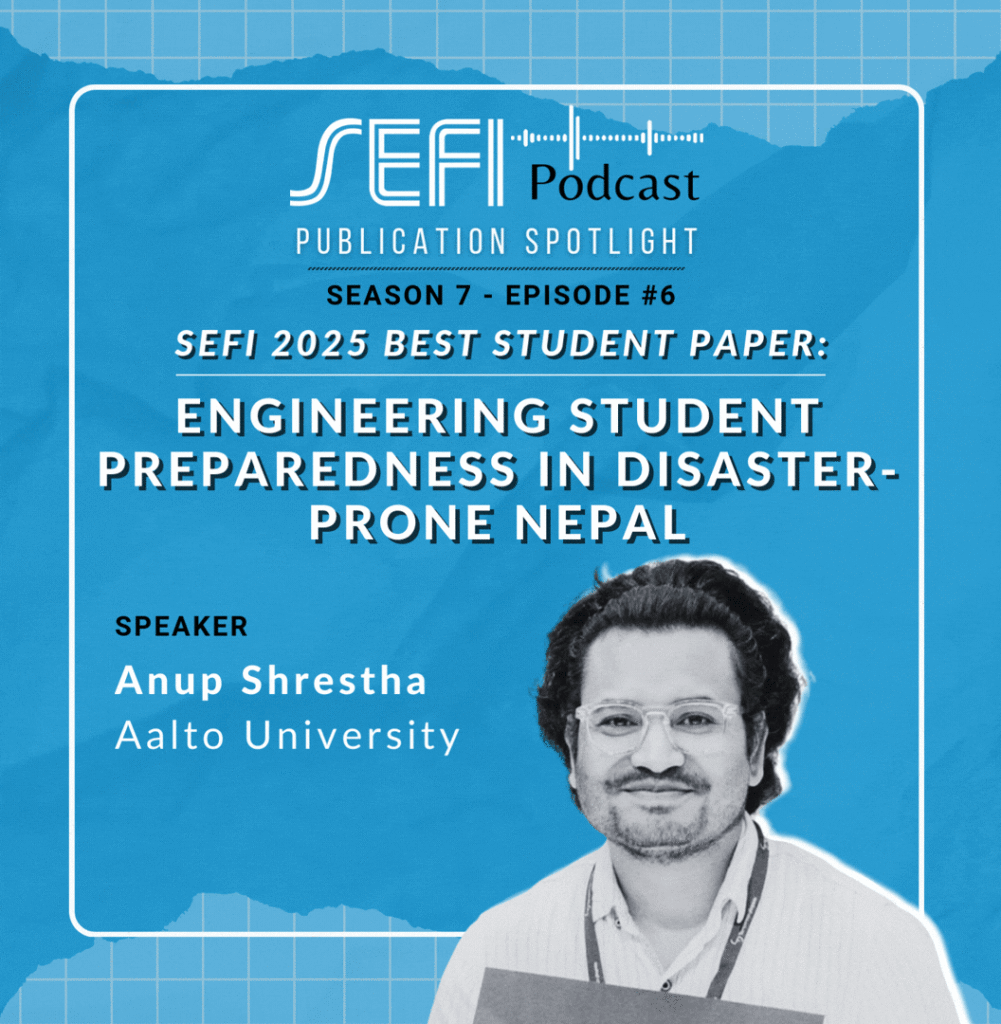
This episode features Anup Shrestha from Water and Development Research Group, School of Engineering, Aalto University (Finland).
We talk about the winner of the ‘Best Student Paper’ at the SEFI 2025 Conference entitled “Are Disaster-Prone Countries’ Undergraduate Students Prepared? Insights from a Civil Engineering Program in Nepal” which Anup co-authored with Julia Sundman, Josias Láng-Ritter, Maija Taka, Olli Varis (Aalto University) and Sudeep Lamsal (Sagarmatha Engineering College).
The paper considers the degree to which undergraduate civil engineering students in disaster-prone countries are adequately prepared. The research involves the use of a questionnaire to evaluate Nepalese students’ knowledge of Disaster Risk Reduction (DRR), resilience concepts, and related competencies. Students were found to exhibit DRR knowledge, but had limited opportunities to participate in DRR courses, workshops, or training. Whilst they possessed the basic concepts of resilience, there was a notable gap in their ability to apply these concepts in designing resilient structures. The research team thus suggest that additional efforts focus on integrating these competencies into engineering curricula.
You can read the full paper here.
This is the third episode from the new SEFI Podcast: Publication Spotlight series which aims to complement our normal, longer length shows. In these episodes, we speak with authors of recent publications to bring you up to date with some of the latest work within engineering education.
Related Posts