
About the group
Engineers need to have the competences to adapt, up- and re-skill – developing these competences through education and refining throughout their working life. This ability, along with ongoing (lifelong/continuing) learning, enables engineers to tackle the current and emergent needs of society.
This SIG brings together those (such as universities, industry, professional engineering bodies, and trade unions) interested in supporting engineers to develop themselves throughout their life of learning.
The SIG recently published a Position Paper on Lifelong Learning and Continuing Engineering Education, that frames our call for a more systematic approach to Continuing Engineering Education and lifelong learning.
Objectives
Create a community of practitioners, researchers and policy makers and influencers that will:
- Contribute to European (and wider international) policy and practices in Continuing Engineering Education (CEE) and Lifelong Learning (LLL);
- Conduct research and evaluation to advance practice and conceptual understanding of CEE and LLL;
- Engage with other SEFI SIGs, recognising that CEE and LLL relate to other SIGs;
- Collaborate internationally to share practices to progress European effectiveness in CEE and LLL.
Activities
- Regular SIG meetings to support knowledge sharing by sharing practices, shared opportunities and challenges;
- Organisation of themed workshops (including at SEFI Annual Conference);
- Organise events (webinars) for the wider CEE and LLL community;
- Bring together members to research and evaluate current and emergent topics in CEE and LLL.
Key Publications
- Borri, C. and Maffioli, F. (2007) TREE: Teaching and Research in Engineering in Europe.
- Carrión García, Andrés & Carot, Jose & Soeiro, Alfredo & Hämäläinen, Kauko & Boffo, Stefano & Pausits, Attila & Murphy, Mike & Marhl, Marko & Vidal, Javier & Mora, Jose & Padfield, Christopher. (2012). Green Paper. Fostering and Measuring ´Third Mission´ in Higher Education Institutions. 10.13140/RG.2.2.25015.11687.
- Horvat, M. and Reichl, F. (1993) ‘EuCEENet: European Continuing Engineering Education Network’, European Journal of Engineering Education, 18(2), pp. 191–199. doi: 10.1080/03043799308923233.
- Klus, J.P., Markkula, M., Venho, J., JARVENPM, A., Sirkeinen, U. and AHLROOS, R., 1985. Effective technology transfer. Helsinki: Katkaoffset.
- Lappalainn, P & Markkula, M. (2009) European Continuing Engineering Education Conceptualizing the Lessons Learned
- Markkula, M., Miettinen, K. and Lindquist, K. (1993). EuroPro: A Project to Create a European Professional Development Degree. European Journal of Engineering Education, 18(2), pp.155-159.
SIG CEE/LLL contributions
The paper underlines the crucial role of lifelong learning (LLL) in equipping engineers with the competences needed to respond to rapid societal, technological, and economic change. With Europe facing skills shortages that hinder the green and digital transition, the paper calls for universities, employers, and professional organisations to work together in providing meaningful opportunities for continuous development. Lifelong learning is presented as essential not only for engineers but also for educators and all stakeholders in engineering education.
This position paper reaffirms SEFI’s commitment to supporting responsible innovation, advancing the UN Sustainable Development Goals, and strengthening engineering expertise across Europe.
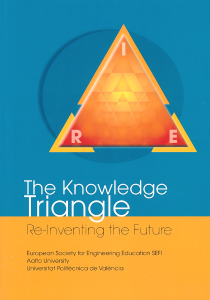
The special interest group has collected best practices from leading European institutions in continuing engineering education and life¬long learning through the introduction books: “European Continuing Engineering Education – Conceptualizing the Lessons Learned” and “The Knowledge Triangle – Re-Inventing the Future”. The books will introduce you to CEE methodology, operators, experiments and quality assurance.
History of the Group
The Continuing Engineering Education and Lifelong Learning SIG was created at the SEFI General Assembly in 1980 in Paris, France, reflecting worldwide interest in Continuing Education. CEE was a new emergent mission, and an opportunity for universities and industry. This period saw an open-minded, collaborative approach that helped individuals and institutions learn and exchange knowledge through annual working group seminars.
The 1990s and 2000s saw the expansion of CEE and LLL within Europe, with highlights including the development of EuroPro (European Professional Degree), with the objective “to develop a framework for continuing professional development of engineers”1, the launching of the European Continuing Engineering Education Network (EuCEENet)2, the focus of the 1996 SEFI Annual Conference in Vienna being LLL during the European Year of Lifelong Learning, and the launching of the Thematic Network Engineering Education for Europe (THENUCE) project in 19973.
In recent years, the impact of digitalisation and globalisation has come to the fore, and continues to do so. Recent work has continued to focus on different aspects, including 1) what we are offering in CEE, 2) how we are offering CEE, 3) to whom are we offering, and 4) how we support those that deliver CEE. In 2025, the SEFI Position Paper on Lifelong Learning was published, serving as a basis for our future discussions and work. In 2025 the SIG also celebrated its 45th anniversary at the SEFI Annual Conference in Tampere.
A full poster celebrating and outlining 45 years of CEE & LLL SIG history can be read here.
1 See Markkula, Miettinen & Lindquist, 1993 for information; paper in EJEE, Vol 18 (2)
2 See Horvat and Reichl (1993)
3 Co-ordinator Viktor de Kosinsky
SEFI Podcast European Engineering Educators with Neil Cooke and Natalie Wint: Season 8 Episode 1 – SEFI Handbook on Teaching Transferable Competencies and Skills in Engineering with Editor in Chief Gillian Saunders-Smits
In every episode of the SEFI podcast, several transferable skills are mentioned, this highlighting their importance in engineering education and to the engineering profession more widely. In this episode, we speak with Gillian Saunders-Smits from TU Delft about her work…
SEFI Elects New Vice-President and Board Members at the 2026 General Assembly
During the SEFI General Assembly, held on 8 September 2026 as part of the SEFI Annual Conference 2026 at the Czech Technical University in Prague, SEFI members elected a new Vice-President and seven new members of the SEFI Board of…
Meet our Special Interest Groups at SEFI 2026
List of SEFI Special Interest Groups (SIGs) and their activities at the Annual Conference in Prague, Czech Republic 7-10 September 2026, Czech Technical University in Prague SEFI activities take place year-round, primarily within our Special Interest Groups. Below is an…
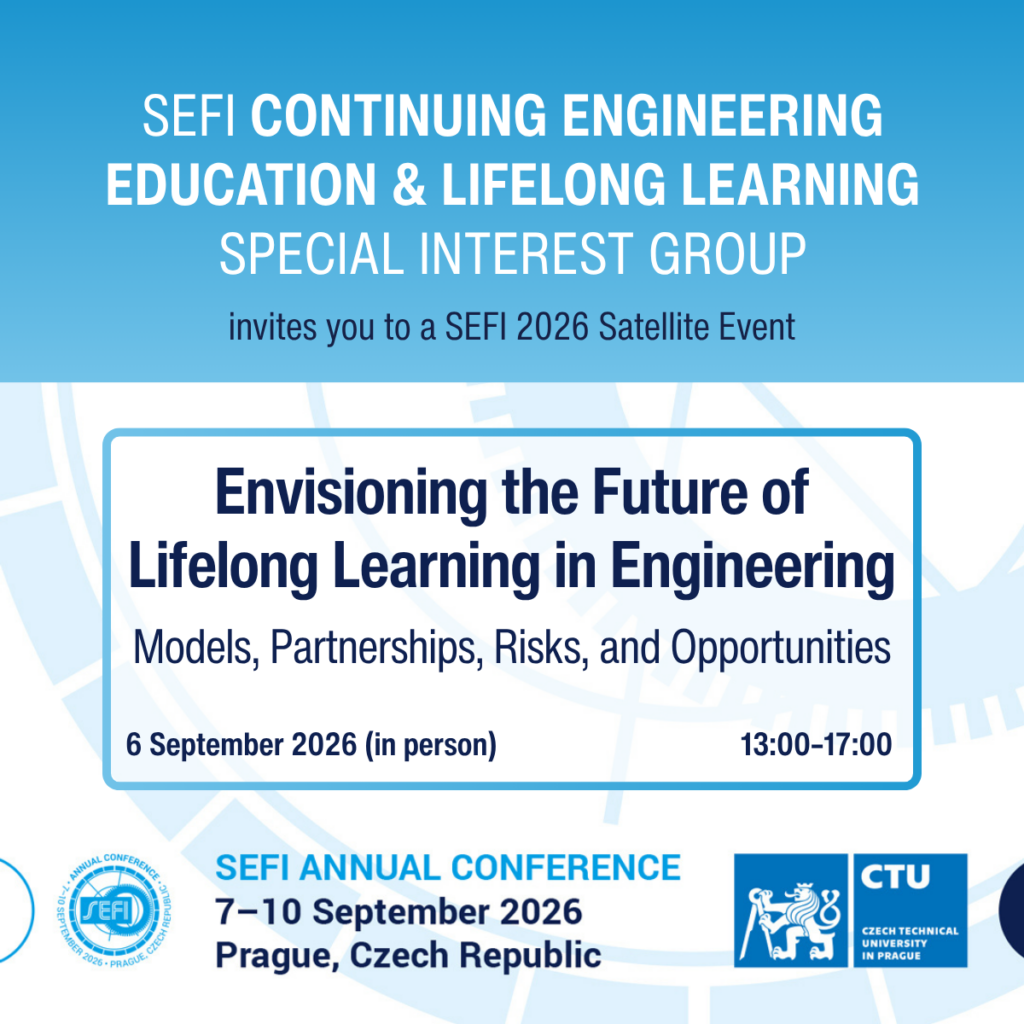
Envisioning the Future of Lifelong Learning in Engineering: Models, Partnerships, Risks, and Opportunities (SEFI 2026 Satellite Event)
Date: Sunday, 6 September 2026Time: 13:00–17:00 (registration and networking lunch from 12:15 for pre-registered participants)Location: Czech Technical University in (CTU)(room to be confirmed) REGISTER HERE The SEFI Continuing Engineering Education and Lifelong Learning (CEE/LLL) Special Interest Group invites you to…
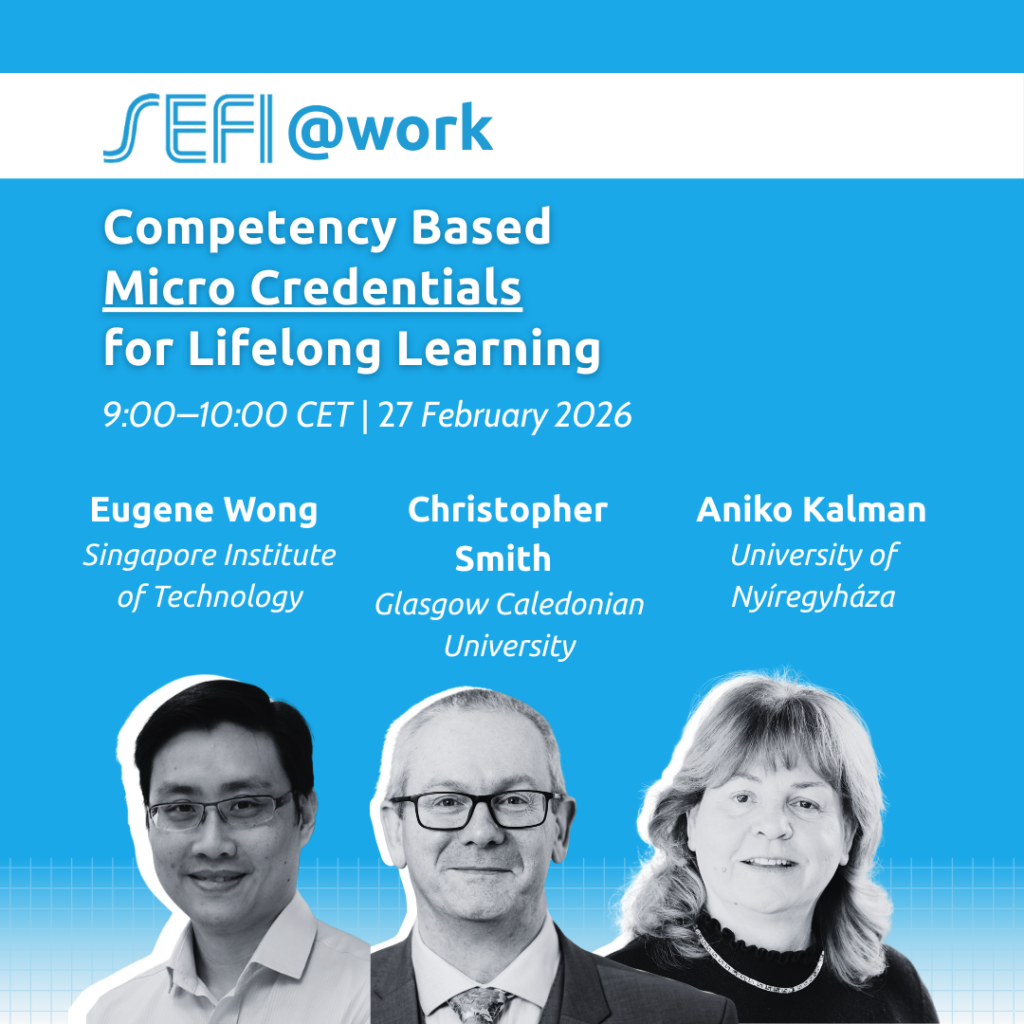
SEFI@work | Competency Based Micro Credentials for Lifelong Learning
27 February 2026
This talk highlights how SIT’s competency based micro credentials are designed around measurable, skill competencies, enabling learners—including working professionals—to acquire and demonstrate skills through authentic, practice oriented assessments.
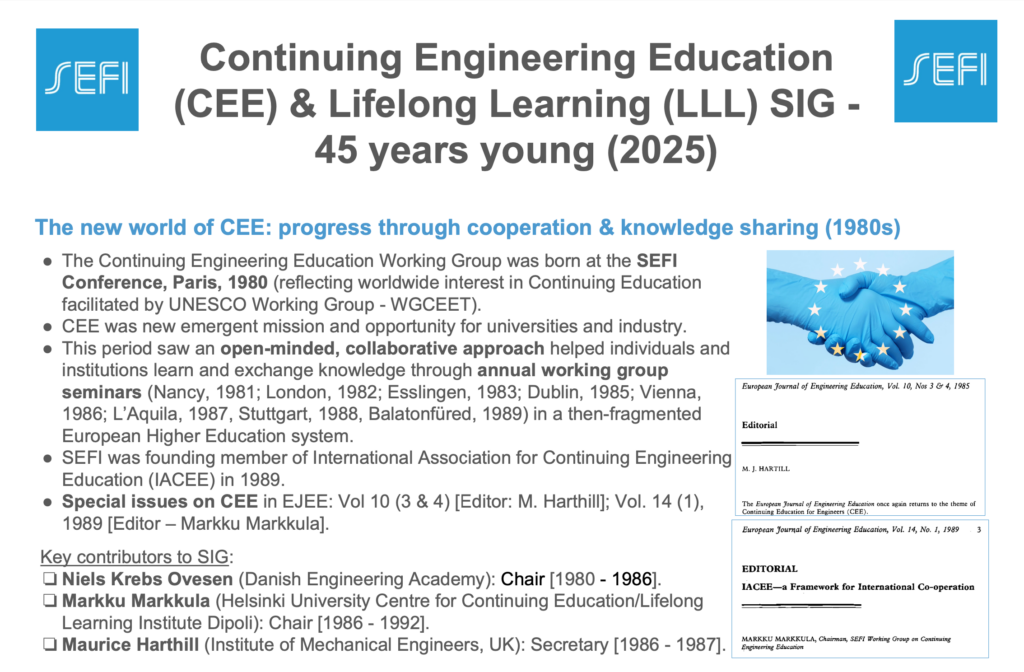
Continuing Engineering Education Group celebrates 45 years at the SEFI Annual Conference in Tampere
The Special Interest Group in Continuing Engineering Education and Lifelong Learning celebrated its 45th anniversary at the SEFI Annual Conference in Tampere. The group was created at the General Assembly in 1980 in Paris, France. A small working group (Anikó Kalman, Alfredo…
SEFI position and long-term plan on lifelong learning
SEFI is glad to announce the release of its new position paper, Drivers for Lifelong Learning in Engineering Education. The paper underlines the crucial role of lifelong learning (LLL) in equipping engineers with the competences needed to respond to rapid…
Meet our Special Interest Groups at SEFI 2025
List of SEFI Special Interest Groups (SIGs) and their activities at the Annual Conference in Tampere, Finland 15-18 September 2025, Tampere University SEFI activities take place year-round, primarily within our Special Interest Groups. Below is an overview of the sessions…
SEFI PhD Summer School 2025: A week of inspiration, exchange, and growth
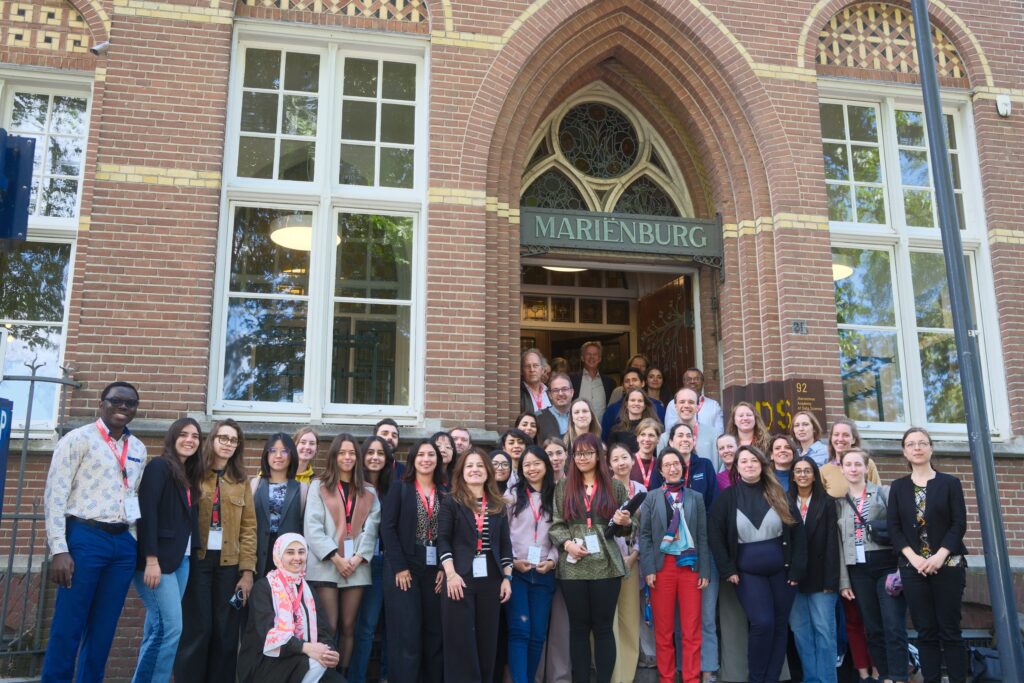
The SEFI PhD Summer School 2025, held at the inspiring JADS Den Bosch, brought together 36 PhD students from 13 countries for four days of intensive learning, reflection, and connection.

(Call closed) The SEFI Early Career Researchers’ Club
UPDATE: We sincerely thank all participants for their interest in the 2025/26 intake. The survey is now closed. Respondents will be notified during the week of 15 July 2025 regarding the next steps. For those who missed this round, the next application…