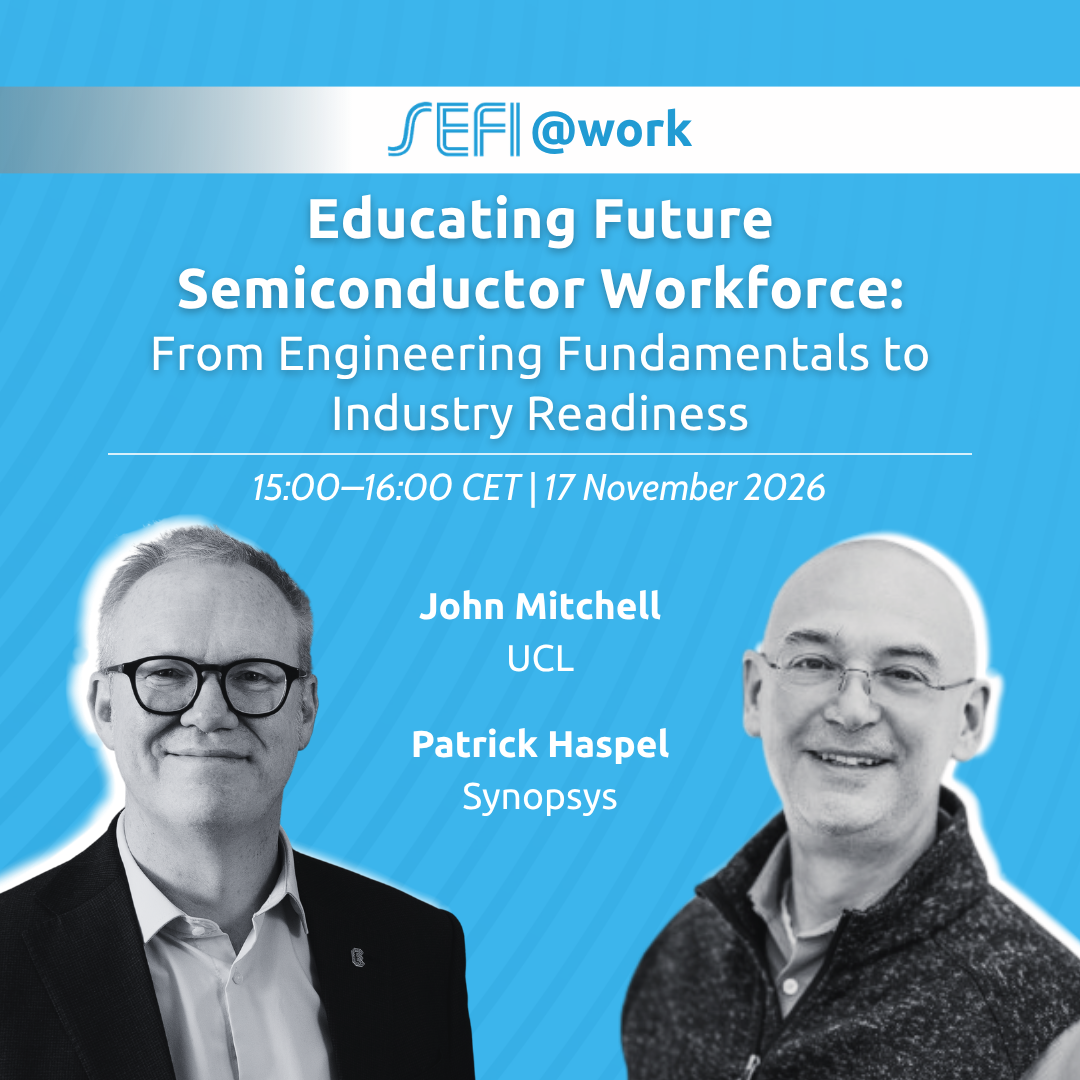
This webinar will bring together perspectives from Synopsys, including Patrick Haspel, Executive Director Synopsys Academic and Research Alliance, to explore how academic-industry collaboration can prepare the next generation of semiconductor engineers.
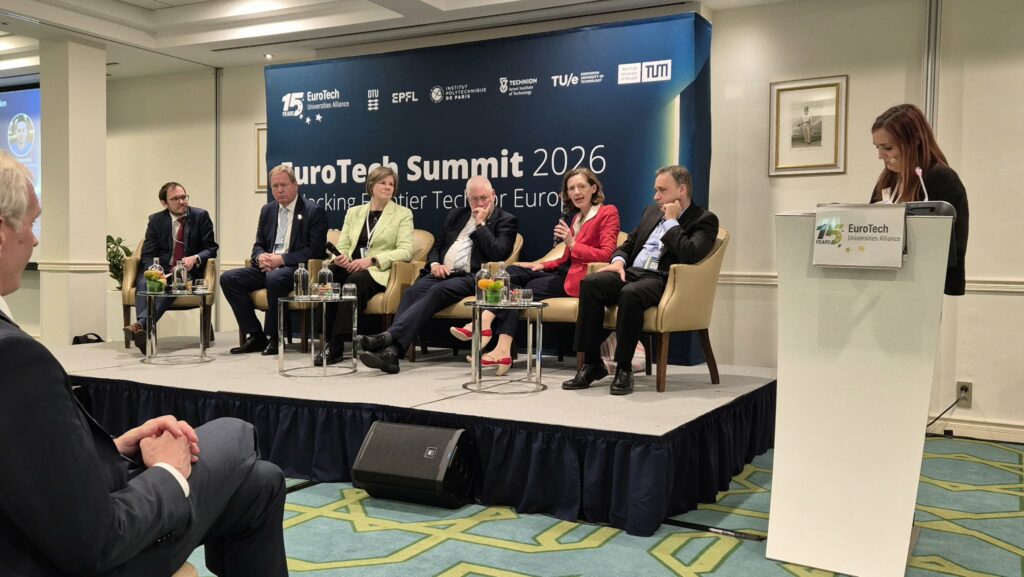
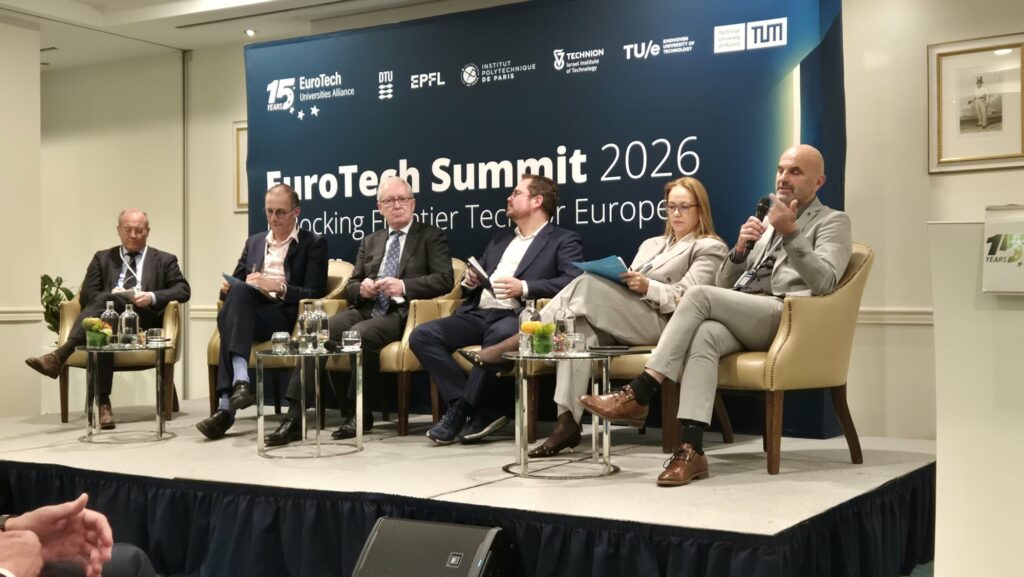
On 28 October 2026, SEFI Secretary General Klara Ferdova joined university leaders, European policymakers and industry representatives in Brussels for the EuroTech Universities Alliance’s 15th anniversary summit, “Unlocking Frontier Tech for Europe”.
The alliance brings together leading universities of science and technology to strengthen cooperation in research, education and innovation and contribute to European policy discussions. Its members are the Technical University of Denmark (DTU), École polytechnique fédérale de Lausanne (EPFL), Institut Polytechnique de Paris, Technion – Israel Institute of Technology, Eindhoven University of Technology (TU/e) and the Technical University of Munich (TUM).
The celebration also marked the announcement that the Czech Technical University in Prague (CTU) and Tallinn University of Technology (TalTech) will join on 1 January 2027. SEFI Secretary General Klara Ferdova participated alongside rectors, vice-rectors, European policymakers and industry representatives in discussions on how stronger connections between science, industry, education and public policy can turn technological advances into benefits for society.
Across discussions on digital technologies, clean energy, health and biotechnology, and security and space, one message kept returning: Europe needs stronger connections between research, industry and public policy to turn scientific breakthroughs into practical benefits for society.
Participants highlighted the importance of shared research facilities, access to high-quality data and sustained investment. They also emphasised that innovation involves continuous exchange: practical challenges can inspire new research, while scientific discoveries open up new possibilities for industry.
For SEFI, these discussions offered a clear connection to engineering education. Strong scientific foundations, interdisciplinary collaboration and entrepreneurial skills help engineers navigate emerging technologies and bring ideas into practice. Multidisciplinary student teams and closer university–industry cooperation were among the approaches discussed.
The summit reinforced the importance of including education and skills in debates about Europe’s technological future. Preparing engineers to develop, apply and critically assess new technologies is an essential part of translating Europe’s research strengths into lasting societal impact.
Related Posts